
Paid chance mechanics inside video games went mainstream without ever being classified as gambling. Publishers sold randomised rewards to players of all ages, built billion-dollar revenue models around the uncertainty of the outcome and operated entirely outside gambling law for years. Age verification was absent. Spending limits did not exist. Regulatory scrutiny was nowhere in the picture. That situation is now changing and the change is coming from five different directions at once.
Belgium moved first and moved hard. The Netherlands followed with protections aimed specifically at children. France took a consent-based approach. Poland is still working through legislation that would bring virtual goods under its Gambling Act entirely. Spain launched a national campaign targeting youth exposure before any formal law was passed. Each country reached its own conclusion through its own process, but the underlying logic connecting all five is identical: when real money buys a randomised outcome, the label on the product does not change what the transaction actually is.
This is what each country did, why they did it and what the cumulative picture looks like for players and parents in Europe today.
Why Regulators Started Paying Attention to Loot Boxes
Gambling law in most European countries was written decades before digital storefronts existed. Publishers exploited that gap deliberately. As long as items inside a loot box had no cash withdrawal value, the argument ran, the transaction was a purchase not a bet. For years regulators accepted that framing because nobody had formally tested it.
What changed was scale. EA alone reported over a billion dollars annually from Ultimate Team packs. Academic researchers started connecting loot box spending directly to problem gambling indicators. Parent groups pushed governments for answers. The legal definitions regulators were working with no longer held up. For anyone trying to understand how gaming and gambling mechanics became this entangled, the full picture goes well beyond loot boxes alone and is covered in detail in EuroGamersOnline from consoles to casinos.
The Mechanics That Put Loot Boxes in the Same Category as Gambling
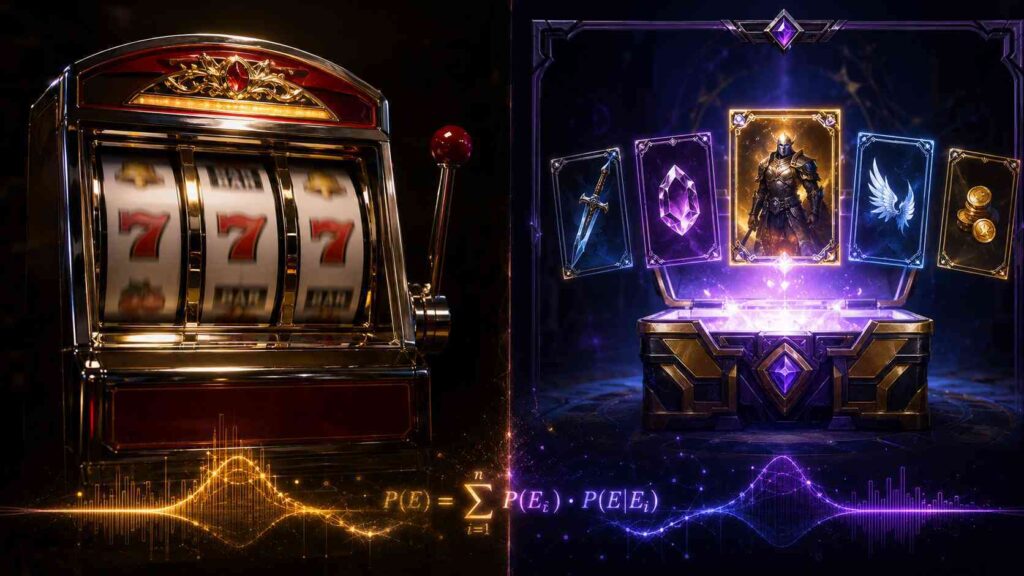
Variable ratio reinforcement is the mechanism at the centre of this debate. It describes a reward system where outcomes are randomised and unpredictable, producing stronger and more persistent behaviour than fixed rewards. Slot machines are built on it. So are loot boxes.
Researchers at Nottingham Trent University found that loot box engagement predicted gambling problems in adolescents independent of other risk factors. Not because the same people who gambled also bought loot boxes. Because the spending behaviour itself was functioning like gambling behaviour in measurable psychological terms.
That distinction mattered enormously when it landed in front of regulators. It shifted the conversation from what loot boxes looked like to what they actually did to the people using them. And once that framing took hold, the policy responses followed quickly.
The same variable ratio reinforcement that drives loot box spending is what makes certain casino games feel unbeatable, something we cover in detail in our guide on skill vs chance in casino games.
Belgium: The Country That Moved First
Belgium did not wait for a European consensus. In 2018 the Belgian Gaming Commission reviewed several major titles including FIFA, Overwatch and Counter-Strike: Global Offensive and concluded that their loot box systems met the legal definition of games of chance under Belgian gambling law. The ruling was not a recommendation. It was a classification and it carried immediate legal consequences.
Publishers were given a choice. Remove paid loot boxes from the Belgian versions of their games or face criminal prosecution. EA, Blizzard and Valve all responded differently. Valve removed CS:GO case openings for Belgian players. Blizzard disabled loot box purchases in Overwatch. EA refused to make changes to FIFA and argued its card packs did not meet the legal threshold, a position that put it on a collision course with Belgian authorities.
By 2025 an Antwerp court had gone further, ruling that loot boxes purchased with real money were unlawful outright. Not just regulated. Unlawful. That ruling positioned Belgium as the hardest legal line drawn by any EU member state on the issue and set a precedent that other countries have since referenced in their own legislative discussions.
What made Belgium’s approach significant was not just the outcome but the method. Rather than creating entirely new legislation, regulators applied existing gambling law to a new context. The games were not the problem in isolation. The transaction was. That framing proved more durable than anyone in the publishing industry had anticipated.
The Netherlands: Child Protection at the Centre
The Dutch Gaming Authority investigated loot boxes in 2018 and found that four out of ten games it examined violated gambling law. Publishers were ordered to modify or remove offending mechanics within a set timeframe or face fines. Several complied. Others went to court.
Where Belgium asked whether loot boxes were gambling, the Netherlands asked who was being exposed to them. That different starting point produced a different kind of regulation entirely.
What the Dutch Ban Actually Covers
For games featuring purchasable loot boxes, compliance with Dutch gambling regulations is mandatory. For titles designed or marketed toward children the ban is complete, no paid randomised rewards, no workarounds through virtual currency systems that can themselves be bought with real money.
Dutch regulators were explicit about why. Children cannot legally gamble. A mechanism that functions like gambling embedded inside a product aimed at children does not earn an exemption because it loads inside a video game. The age of the target audience determined how strictly the rules applied and that logic has proven resistant to challenge.
Enforcement has not been perfectly consistent and some publishers delayed compliance through legal disputes. The framework itself has not moved.
France: Consent, Verification and a Different Approach
France did not classify loot boxes as gambling and did not ban them. What French regulators did instead was place the responsibility of access control onto platforms directly. Mandatory parental consent and adult account verification are now required before any minor can make loot box purchases. The burden of proving the buyer is an adult sits with the platform, not the player.
It is a softer line than Belgium or the Netherlands drew. Critics argue it does not go far enough because verification systems can be circumvented and parental consent in practice often means a parent entering card details once without fully understanding what they are authorising. Those are fair criticisms.
What France got right is the acknowledgement that the problem is not the existence of loot boxes in every context. It is access by people who are not equipped to engage with chance-based spending. Building age gates and consent requirements into the purchasing flow at least forces that conversation to happen before money changes hands rather than after.
Poland: Draft Legislation and What It Would Change
Poland has not yet passed a law. What it has done is put a serious legislative proposal on the table that would go further than any other EU country has gone so far.
Draft legislation submitted in December 2025 would bring purchasable virtual goods, including loot boxes, directly under Poland’s Gambling Act. Not a separate framework. Not a modified classification. The same law that governs casinos and betting shops. If passed, any game featuring paid randomised rewards would be subject to the full weight of Polish gambling regulation, including licensing requirements, age verification obligations and advertising restrictions.
Where Poland’s Law Currently Stands
As of 2026 the legislation is still working through the parliamentary process. It has not been voted on and no implementation date has been set. The proposal has drawn significant pushback from the games industry, with publishers arguing the definition is too broad and would capture mechanics that bear no meaningful resemblance to gambling.
That debate is ongoing. What is notable is that the draft exists at all and that it arrived with cross-party support. Poland entering this space with such an expansive proposal signals that the regulatory appetite across Europe is still moving in one direction, toward stricter treatment, not away from it.
Spain’s Menos Loot Boxes Campaign and What Followed
Spain took a different route to the same destination. Rather than leading with legislation, the Spanish government launched a national awareness campaign in October 2025 called Menos Loot Boxes, targeting youth exposure to paid chance mechanics in games. The campaign ran across schools, social media and gaming platforms, with materials designed specifically for teenagers and the parents of younger children.
The logic behind starting with awareness rather than law was practical. Building political consensus around gambling legislation takes time. Public education can move faster and can shift behaviour before formal rules are in place. Spain had already tightened its online gambling advertising rules significantly in 2021 and the Menos Loot Boxes campaign sat within that broader direction of travel.
Formal regulatory proposals have followed the campaign. Spanish legislators have discussed bringing loot boxes under the existing gambling framework in ways that would mirror elements of the Belgian approach, though no final legislation had passed as of early 2026. The campaign itself generated measurable results in terms of public awareness, with reported increases in parental understanding of what loot boxes are and how they function financially.
What Spain illustrates that the other four countries do not is that regulation does not always start with a law. Sometimes it starts with making sure the public understands what they are looking at. That foundation tends to make the legislation that follows more durable.
What the Pattern Across All Five Countries Is Telling Us
Belgium banned. The Netherlands protected children specifically. France built consent requirements into the purchasing flow. Poland drafted legislation broad enough to bring virtual goods under full gambling law. Spain educated first and is legislating second. Five different approaches, five different speeds, five different legal tools.
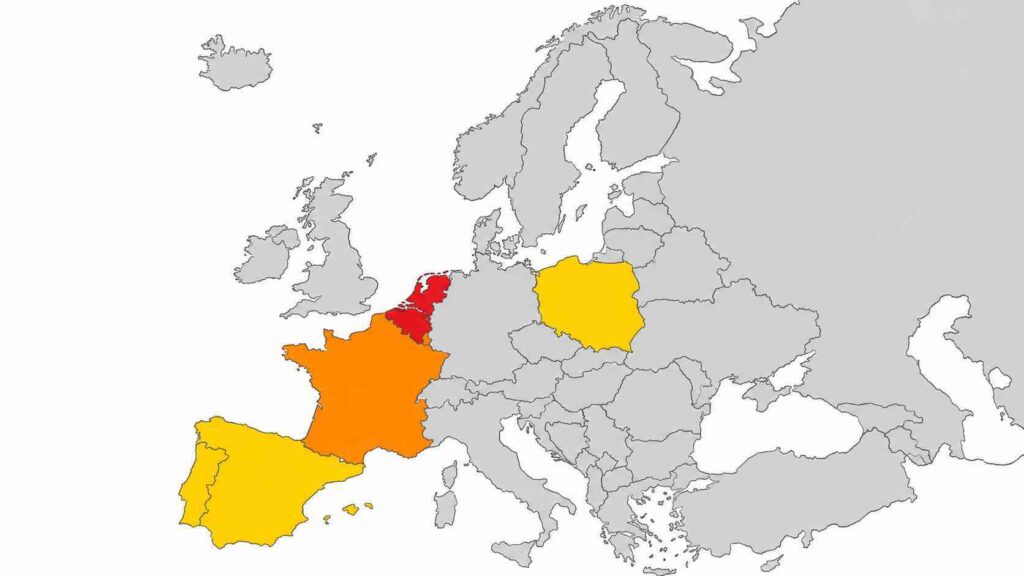
The common thread is not the method. It is the conclusion every one of them reached independently: paid randomised rewards inside games are close enough to gambling in their mechanics and their effects that leaving them outside gambling regulation is no longer defensible.
That consensus did not exist in 2017. It exists now and it is still building. The European Gaming and Media Law conference in early 2026 flagged loot box regulation as one of the fastest moving areas of digital consumer protection law across the continent.
More member states are actively reviewing their positions. The countries that have not yet acted are increasingly the exception rather than the rule.
For the games industry the direction is clear even if the final destination varies by jurisdiction. Paid chance mechanics will face tighter oversight across Europe. The only real variables are timing and the specific legal framework each country chooses to apply.
What This Means If You Are a Gamer or Parent in Europe Right Now
If you are in Belgium or the Netherlands, the law has already made certain decisions for you. Paid loot boxes in major titles are either gone or restricted depending on the platform and the game. You may not have noticed because publishers removed them quietly without announcement, but the purchasing options that existed five years ago are no longer there.
Everywhere else the picture is less clear and that is worth paying attention to. A game available in your country today with fully functional loot box purchasing may look very different in two years depending on how your government moves. Poland’s draft law alone, if passed, would represent the most sweeping change to how virtual goods are treated under European gambling legislation since Belgium acted in 2018.
For parents the more immediate point is this. Regulation has not caught up everywhere yet. Until it does, the responsibility of understanding what paid chance mechanics are and how they work financially sits with the adults in the room. A child who spends three years opening card packs and weapon crates before they are old enough to enter a casino has already been introduced to the core experience of chance-based spending. That introduction happened inside products sold to them as games.
The research connecting that experience to later gambling vulnerability is not speculative. It is published, peer reviewed and was cited directly by regulators in Belgium and the Netherlands when they made their decisions.
Know what you are looking at before you decide whether to engage with it. That applies to loot boxes and it applies to everything built on the same psychological foundation.
FAQ
Q1: Are loot boxes classified as gambling in Europe?
It depends on the country. Belgium classifies them as games of chance under existing gambling law. The Netherlands restricts them heavily with a complete ban in games aimed at children. France requires parental consent and age verification. Poland has draft legislation that would bring them under its Gambling Act entirely. There is no single EU wide classification yet but the Digital Fairness Act expected in Q4 2026 may change that.
Q2: Which European countries have banned loot boxes?
Belgium has the strictest position, effectively banning paid loot boxes and ruling them unlawful in a 2025 Antwerp court decision. The Netherlands bans them completely in games designed for children. France, Poland and Spain have not issued outright bans but have introduced restrictions, consent requirements or are actively working toward formal legislation.
Q3: Can children legally buy loot boxes in Europe?
Belgium has removed the question entirely. Paid loot boxes are banned outright regardless of who is buying. The Netherlands prohibits them specifically in games designed for children. France sits in between, requiring platforms to obtain verified parental consent before any minor can complete a loot box purchase. Everywhere else the legal picture is still catching up and for now parents rather than regulators are largely left to manage exposure themselves.
Q4: What is the Digital Fairness Act and how does it affect loot boxes?
The Digital Fairness Act is EU legislation expected in Q4 2026. European Parliament committees have called for loot boxes to be addressed directly within it, specifically recommending a ban in games accessible to minors and a harmonised approach across all member states. If passed it would replace the current patchwork of national rules with a single EU wide framework.
Q5: What is the difference between a loot box and a slot machine?
Mechanically very little. Both use randomised outcomes, weighted probabilities invisible to the user and a reveal moment engineered to produce an emotional response. The primary legal distinction has been that loot box rewards are virtual with no direct cash withdrawal value. That distinction is what regulators across Europe are now challenging, with several countries concluding it is not sufficient to place loot boxes outside gambling law.

Bryan Carter has been writing about online casinos and crypto gambling long enough to know that most of what gets published in this space is dressed up advertising. He started Casivono to fix that. The guides here cover how casino platforms actually work, what the regulation really says, and what players need to know before they put money anywhere. No rankings built around affiliate fees. No five star reviews for platforms that do not deserve them. Just straight information.