
Two players open the same slot game on the same device. The interface is identical. The symbols are identical. The bonus round triggers the same way and the win animation plays out the same sequence. One player closes the app having spent nothing and lost nothing. The other has just lost forty euros.
That is the entire difference between a social casino and a real money casino. Same games, same design, same experience of playing. The only thing that changes is the consequence of the outcome.
Most players who make the switch from social to real money do not fully register that shift until something goes wrong. The platforms are designed to feel continuous because continuity serves them. Understanding exactly where one ends and the other begins is not complicated once someone explains it clearly. Almost nobody does.
What a Social Casino Actually Is
A social casino is a platform that offers casino style games using virtual currency instead of real money. Slots, blackjack, roulette, poker, the game selection mirrors what you would find on any licensed gambling site. The difference is that the chips, coins or credits you play with exist only inside the platform. You cannot withdraw them. You cannot convert them to cash. Whatever you accumulate stays there.
Most social casinos give new users a starting balance of virtual currency for free. Daily login bonuses top it up. Promotional events add more. When the balance runs low players can either wait for the next free top up or purchase additional coins with real money. That purchase buys continued access to the platform, not a stake in any outcome.
This model puts social casinos closer to mobile gaming than to gambling from a legal standpoint. No real money wager, no regulated gambling product. That is why social casinos operate legally in most European countries without gambling licences and why their advertising sits outside the restrictions that apply to real money operators.
The global social casino market was valued at over ten billion dollars in 2026. That scale exists because the product works. Players engage with it seriously, return to it consistently and in many cases spend real money on virtual currency without ever placing a real money bet.
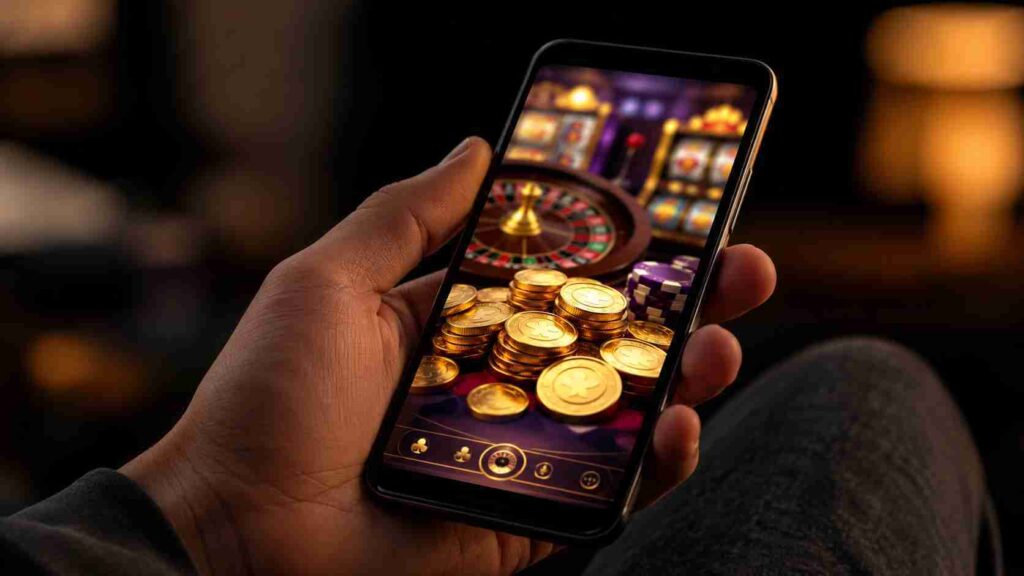
What Changes When Real Money Enters the Picture
Everything that feels the same on the surface is different underneath once real money is involved.
A real money casino requires a funded account before any game pays out. Deposits are real. Withdrawals are real. Losses are real in a way that a depleted virtual coin balance simply is not. The house edge that exists mathematically in both types of platform produces different consequences depending on which one you are using. Losing virtual coins costs you nothing except the time you spent earning them. Losing real money costs you real money.
Licensed real money casinos in Europe operate under regulatory frameworks that do not apply to social platforms. Player fund protection, RNG certification, dispute resolution processes, responsible gambling tools, all of it is mandated by the licence and enforced by the regulator. A social casino is not subject to any of that because the financial risk those frameworks exist to manage is absent from the product.
That regulatory gap has a practical implication. The games on a social casino platform are not independently tested for fairness in the way that real money games are required to be. Some social platforms do operate their games fairly. There is simply no external requirement compelling them to do so.
Why They Look and Feel Identical
The visual similarity between social and real money casino platforms is not accidental. Many social casinos license their games directly from the same developers supplying real money operators. The slot you play on a social platform and the slot you play for real money at a licensed casino are sometimes literally the same product running under different financial conditions.
Operators on both sides have studied what keeps players engaged and arrived at the same conclusions. Progress bars, daily missions, VIP tiers, achievement systems, the gamification layer sitting on top of the games is structurally identical because it draws from the same source, the engagement architecture that console and mobile gaming developed and both casino formats borrowed. For a full breakdown of how that borrowing happened, our guide on EuroGamersOnline from consoles to casinos covers the complete picture.
Same Games, Different Mathematics
When a social casino licenses a slot from a real money developer the game mechanics travel with it. The symbols, the bonus round structure, the visual design. What does not always travel is the RTP calibration. Real money versions of games are independently tested and certified. Social versions may run on different mathematical settings because no certification requirement applies.
This matters for anyone who has spent time on a social platform before switching to real money play. The behaviour of a game you know well from a social context may not match the real money version of the same title. The surface is identical. The mathematics underneath may not be.
The Psychological Bridge Between the Two
Social casinos function as an extremely effective introduction to casino mechanics. Players who have never placed a real money bet learn how slots work, how bonus rounds trigger, how VIP systems operate and how the overall rhythm of a casino session feels, all without any financial consequence. By the time they consider switching to a real money platform the environment feels familiar. The learning curve has already been completed somewhere else.
That familiarity is commercially useful to the real money industry and the relationship between the two sectors reflects that. Several major real money operators own social casino products. The player journey from social to real money is not an accident of user behaviour. It is a pipeline that parts of the industry have deliberately built.
The psychological mechanism underneath this is the same variable ratio reinforcement that makes both gaming and gambling engaging. Social casinos condition the response. Real money platforms monetise it. For a deeper look at how that mechanism works, our guide on variable ratio reinforcement in gaming and gambling explains it in full.
Players who understand this are not at a disadvantage for having used social platforms. They are at an advantage for knowing what the familiarity they feel is actually based on.

What to Check Before You Make the Switch
If you have been using a social casino and are considering moving to real money play, the checklist is short but important.
Verify the licence before you register anywhere. A legitimate real money casino operating in Europe displays its licence number in the footer and that number is verifiable directly on the regulator’s website. MGA and UKGC are the two regulators worth trusting. Everything else requires closer scrutiny. The full verification process is covered step by step in our guide on how to verify a casino licence in Europe.
Understand that the game you know from a social platform may behave differently in its real money version. The RTP, volatility and mathematical settings are not guaranteed to match. Do not assume familiarity with a game title means familiarity with how that game performs when real money is at stake.
Set your responsible gambling tools before your first deposit, not after your first session. Deposit limits, session timers and the option to self exclude are available on every properly licensed platform. Configure them when your thinking is clear, not mid session when the environment around you is designed to keep you playing.
Know what you are switching into. Social casino play carries no financial risk. Real money play does. That is not a reason to avoid it but it is a reason to approach it differently from the way you approached the platform that had no consequences.
Conclusion
The switch from social to real money casino is one of the most common transitions in online gambling and one of the least prepared for. The platforms look the same. The games feel the same. The habits built on one transfer directly to the other. What does not transfer is the consequence of every outcome.
Social casinos are a legitimate form of entertainment. Real money casinos are a legitimate form of gambling. They are not the same thing dressed differently and treating them as interchangeable is where most players who run into problems begin.
Go in knowing the difference. Verify before you deposit. Set your limits before you play. And treat the familiarity the social platform gave you as useful context, not as preparation for something that requires no further thought.
For more on navigating the casino world with your eyes open, Casivono covers licensing, bonuses and platform design in plain language.
FAQ
Q1: What is the difference between a social casino and a real money casino?
A social casino uses virtual currency that cannot be withdrawn or converted to cash. Players engage with casino style games for entertainment without any real financial stake. A real money casino involves actual deposits, real wagers and withdrawable winnings. Losses at a real money casino cost real money. The games on both platforms can look and feel identical. The financial consequence of every outcome is entirely different.
Q2: Can you win real money at a social casino?
Standard social casinos do not offer real money prizes. Virtual currency winnings stay within the platform and cannot be withdrawn. Sweepstakes casinos operate differently, using a dual currency model where a secondary currency can sometimes be redeemed for prizes or cash equivalents. These are distinct from both standard social casinos and licensed real money gambling platforms and operate under sweepstakes law rather than gambling regulation.
Q3: Are social casinos regulated in Europe?
Not under gambling regulation. Because no real money wagering is involved, social casinos sit outside the regulatory frameworks that govern licensed gambling operators in Europe. They are generally treated as entertainment products or mobile games from a legal standpoint. Some European countries are beginning to examine social casino operations more closely, particularly around in-app purchase mechanics and data privacy, but formal gambling regulation does not currently apply to most social platforms operating across the continent.
Q4: Why do social casinos feel like real money casinos?
Because many of them license their games from the same developers supplying real money platforms, use identical gamification systems and are designed around the same engagement principles. The visual and experiential overlap is deliberate. Parts of the real money industry have direct commercial interests in social casino products and the player journey from one to the other is a pipeline some operators have intentionally constructed.
Q5: Is it safe to switch from a social casino to a real money casino?
Switching is safe if you approach it correctly. Verify the licence of any real money platform before registering. Use MGA or UKGC licensed operators and confirm the licence directly on the regulator’s website. Set deposit limits and session timers before your first session. Recognise that the familiarity you have with games from social platforms does not mean those games behave identically in their real money versions. Go in informed and the transition is straightforward. Go in assuming nothing has changed and the differences will find you at the worst possible moment.

Bryan Carter has been writing about online casinos and crypto gambling long enough to know that most of what gets published in this space is dressed up advertising. He started Casivono to fix that. The guides here cover how casino platforms actually work, what the regulation really says, and what players need to know before they put money anywhere. No rankings built around affiliate fees. No five star reviews for platforms that do not deserve them. Just straight information.