
Most gamers who walk into a casino for the first time carry a reasonable assumption with them. They have spent years making fast decisions under pressure, reading patterns, managing resources and outthinking opponents. If those skills matter anywhere outside of gaming, surely a casino is the place.
That assumption is partly right. And partly the most expensive mistake a gamer can make.
The problem is not the instincts. The instincts are real. The problem is applying them to the wrong games. A gamer who sits down at a slot machine believing their pattern recognition gives them an edge is not playing the same game they think they are. But a gamer who takes those same instincts to a poker table is in genuinely useful territory.
Knowing which side of that line each game falls on is what this article is actually about.
The Confidence Problem Every Gamer Brings to a Casino
Gaming rewards competence. That is the entire point of the medium. You get better, the game responds to that improvement, and the feedback loop keeps you engaged. Lose a match and you know why. Watch the replay, identify the mistake, adjust. The relationship between effort and outcome is legible.
Casinos are built on the opposite principle for most of their floor space.
That gap between what gaming trains you to expect and what a casino actually delivers is where most gamers get into trouble. Not because they are reckless or uninformed. Because years of skill-based feedback have created a genuine confidence in their ability to figure systems out. That confidence is an asset in the right context. In the wrong one it becomes the reason someone keeps playing a slot machine convinced the next spin will be different. If you want to understand how that crossover between gaming confidence and casino design developed, the full picture is in our guide on EuroGamersOnline from consoles to casinos.
There is a specific psychological mechanism behind this. Gamers are trained pattern seekers. Noticing recurring enemy behaviour, identifying map rotations, reading opponent tendencies, all of it is pattern recognition applied to systems that actually have patterns. When that same brain encounters the randomised output of an RNG it does not automatically switch off the pattern-seeking. It keeps looking. And it will find patterns that are not there because that is what pattern-seeking brains do with sufficient data points.
Understanding that your biggest gaming strength can become your biggest casino liability is not a reason to avoid casinos. It is the first piece of genuinely useful knowledge to carry into one.
Pure Chance: The Games Where Nothing You Know Makes a Difference
Some casino games have no skill component. Not a reduced one. None. The outcome is determined before you interact with it in any meaningful way and nothing you do between pressing the button and seeing the result changes what that result will be. For a gamer used to outcomes responding to decisions this is genuinely counterintuitive.
Slots and the RNG Reality
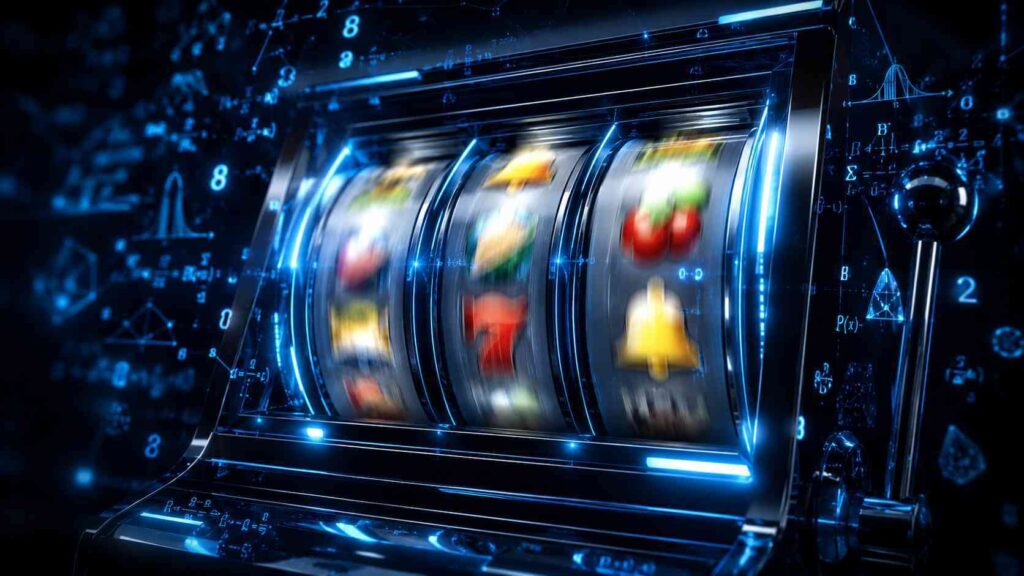
Every spin on a slot machine is decided by a random number generator that runs continuously, producing thousands of outcomes per second. The moment you press spin, a number is selected and the reels display the corresponding result. The animation that follows is cosmetic. The decision was already made.
There is no hot machine. There is no cold machine. A slot that has not paid out in two hours is not due. A slot that just paid a jackpot is not less likely to pay again immediately. Each spin is statistically independent of every spin before it. The RNG has no memory and no pattern. A gamer’s instinct to track output history and adjust strategy accordingly is working perfectly. It is just working on a system that does not reward it.
The house edge on slots typically runs between 2 and 15 percent depending on the game and the platform. That edge is permanent, mathematically guaranteed and completely unaffected by how long you play or how well you think you understand the machine.
Roulette, Baccarat and the Illusion of Pattern
Roulette displays a history board showing the last twenty or so results. Casinos put it there on purpose. It creates the impression that tracking previous outcomes gives you useful information about future ones. It does not. Each spin of the wheel is an independent event. Red coming up eight times in a row does not make black more likely on the ninth spin. The wheel has no memory either.
Baccarat operates the same way. Players track results on scorecards, looking for streaks and patterns to bet into. The ritual feels analytical. It produces the sensation of informed decision making. The cards do not care.
Both games have a fixed house edge that strategy cannot move. You can choose better or worse bets within roulette, avoiding single number bets reduces variance, but you cannot change the fundamental mathematics of the game through skill or observation.
Where Skill Actually Matters
Not every casino game is a closed system. A small number of them have genuine skill components where informed decisions produce measurably better outcomes over time. For a gamer the distinction matters enormously because these are the games where your analytical instincts are not working against you.
Poker sits in a completely different category from everything else on the casino floor. You are not playing against the house. You are playing against other people. The casino takes a small rake from each pot but the outcome is determined entirely by the players at the table. That structure means skill compounds over time in a way it simply cannot in any house edge game. A better player will consistently outperform a weaker one across enough hands. Variance runs high short term but over thousands of hands the skill gap becomes the dominant factor. Reading opponent behaviour, managing probability with incomplete information, adjusting strategy based on observed tendencies, all of it maps directly from competitive gaming. This is the one casino format where a gamer’s instincts are pointing in exactly the right direction.
Blackjack: The One Game Where Strategy Changes the Maths
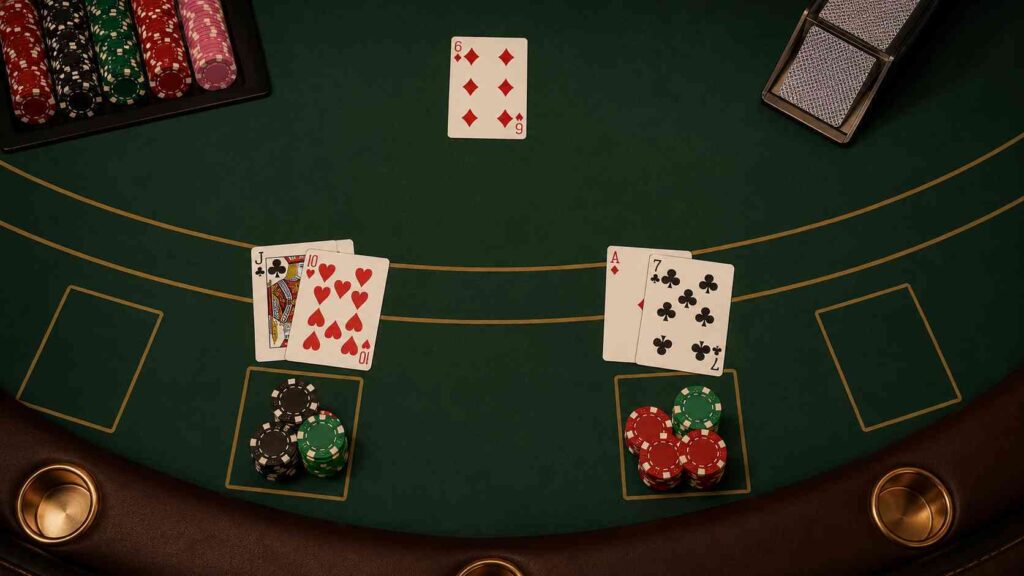
Blackjack is the most documented example of skill reducing a house edge in a casino environment. Basic strategy, the mathematically optimal decision for every possible hand combination against every possible dealer upcard, has been calculated precisely and published openly. A player using it correctly reduces the house edge to somewhere between 0.4 and 0.6 percent depending on table rules. Without it the average player faces a house edge closer to 2 to 3 percent.
That difference is the direct measurable result of applied knowledge changing outcomes over time.
What basic strategy does not do is eliminate the house edge entirely or guarantee short term results. The cards are still random. A player using perfect strategy will still lose sessions. What changes is the long run mathematics and for a gamer comfortable with learning systems and applying them consistently under pressure, blackjack is the one game on the casino floor where that comfort translates into something real.
The Grey Area: Games That Feel Skill Based But Are Not Quite
Some games sit in a space that is genuinely confusing for new players and especially for gamers. They look analytical. These games involve decisions. They reward attention and pattern recognition in ways that feel meaningful. But the skill component is narrower than it appears and understanding exactly where it starts and stops matters more than most guides on this topic admit.
Video poker is the clearest example. The decisions are real. Choosing which cards to hold against which to discard follows an optimal strategy that, like blackjack, has been calculated and documented. A player using correct video poker strategy on a full pay machine can reduce the house edge to under half a percent. That is genuine. What makes it grey area is that finding a full pay machine is increasingly difficult, the strategy charts are game variant specific and change significantly between versions, and the solitary nature of the game removes the human opponent element that makes poker genuinely skill dominant.
Sports betting occupies a different kind of grey area. Research, statistical analysis and genuine domain knowledge can produce an edge over the bookmaker’s initial lines, particularly in niche markets where sharp bettors have less competition. Professional sports bettors exist and some are consistently profitable. But the bookmaker adjusts lines based on betting patterns, meaning any edge degrades as it becomes known, and the vig built into every market means you need to be right more often than feels intuitive just to break even.
Skill based slot hybrids are the newest entrant. Bonus rounds that require genuine reflex input or puzzle solving, where your performance directly affects the payout. The skill component is real but limited to a fraction of the overall session. The base game remains pure chance and you cannot control when the bonus triggers.
What a Gamer’s Mindset Gets Right and Gets Wrong at a Casino
Discipline transfers well. Gamers who study mechanics before committing, who understand that short term variance does not invalidate a long term approach, who are willing to learn a system properly before putting real money on it, those habits have genuine value at a blackjack table or in a poker room. Most players walk into casinos without any of it.
Resource management is another genuine strength. Bankroll discipline, knowing when a session is not going your way and walking away, setting hard limits before you start, these are decisions gamers make instinctively in competitive environments. Applied to a casino they are exactly the right instincts.
Pattern recognition applied to random systems is where it goes wrong. The same conditioning that makes loot boxes and gambling mechanics feel familiar is what makes random systems feel like they have patterns when they do not. The neural machinery keeps firing at slot machines and roulette wheels, finding sequences that mean nothing.
Overconfidence is the quieter problem. Gamers are used to being good at things they invest time in. That expectation of competence developing through effort is reasonable everywhere except pure chance games. Walking into a casino feeling like a fast learner is an asset at a poker table. At a slot machine it is irrelevant.
Loss chasing is worth naming separately. Gaming trains persistence because games are designed to be beatable. Pushing through a losing slots session is not iteration. There is nothing to iterate on.
Play to Your Strengths, Not Your Assumptions
The gamer who walks into a casino with no preparation and the gamer who walks in having actually thought about which games reward analytical thinking are not having the same experience. The difference is not luck. It is knowing where the line between skill and chance actually sits before money is on the table.
Slots, roulette and baccarat are closed systems. Nothing you know changes what happens. Blackjack rewards a learnable strategy that genuinely moves the mathematics in your favour. Poker rewards everything gaming has built in you, pattern reading, opponent modelling, decision making under pressure, and puts it against other people rather than a house edge.
The grey areas exist and are worth understanding. But the core point is simple. Bring your discipline, your willingness to learn properly before committing, and your ability to manage a session without letting variance make decisions for you. Leave the pattern seeking for systems that actually have patterns.
For more on navigating the casino world as a gamer, Casivono covers everything from crypto platforms to responsible gambling in plain language.
FAQ
Q1: Can gaming skills help you win at casino games?
In some games yes, in most no. Poker and blackjack have genuine skill components where informed decisions improve outcomes over time. Slots, roulette and baccarat are governed entirely by random number generators or fixed probabilities. No amount of gaming experience, pattern recognition or strategic thinking changes what happens in those games.
Q2: Which casino games involve the most skill?
Poker is the most skill dependent casino game because you play against other people rather than the house. Over enough hands the better player wins consistently. Blackjack follows, where basic strategy reduces the house edge to under one percent. Video poker on full pay machines also rewards correct strategy. Everything else on the casino floor is predominantly or entirely chance based.
Q3: Does strategy actually work in blackjack?
Yes and the numbers are documented. Basic strategy, the optimal play for every hand combination against every dealer upcard, reduces the house edge from roughly 2 to 3 percent down to 0.4 to 0.6 percent depending on table rules. That is a real and meaningful difference produced entirely by applying learned decision making rather than guessing.
Q4: Why do gamers sometimes struggle at casinos despite being strategic thinkers?
Because the pattern recognition that makes gamers effective in skill based environments keeps firing in random ones. A gamer at a slot machine will notice sequences, build theories about machine behaviour and act on them. Those patterns are not real. The RNG produces independent outcomes with no memory of previous results. The analytical instinct is working correctly. It targets a system that does not reward it.
Q5: What is the difference between skill based and chance based casino games?
In skill based games like poker and blackjack, player decisions directly influence outcomes and better decisions produce better results over time. In chance based games like slots and roulette, random number generators or physical probability determine outcomes, and no decision a player makes changes the underlying mathematics. Chance based games maintain a fixed and permanent house edge regardless of how the player approaches the game.

Bryan Carter has been writing about online casinos and crypto gambling long enough to know that most of what gets published in this space is dressed up advertising. He started Casivono to fix that. The guides here cover how casino platforms actually work, what the regulation really says, and what players need to know before they put money anywhere. No rankings built around affiliate fees. No five star reviews for platforms that do not deserve them. Just straight information.