
You have been there. A game you were about to quit. One more run, one more match, one more chest to open. Something kept pulling you back even when the rational part of your brain was already done. You were not being weak or undisciplined. You were responding exactly the way the system was designed to make you respond.
That system has a name. It was identified in a laboratory in the 1950s, documented across hundreds of experiments, and has since been applied deliberately in every slot machine ever built and quietly borrowed by virtually every major game released in the last fifteen years.
Understanding it does not make you immune. But it does change the relationship between you and any platform built around it.
What Skinner Actually Discovered and Why It Still Matters
B.F. Skinner spent years in the 1950s watching rats press levers. What he was mapping was not rat behaviour. He was mapping the relationship between reward timing and persistence. What he found changed how psychologists understood human motivation and, eventually, how entire industries were designed.
Skinner identified four reinforcement schedules. Fixed ratio, fixed interval, variable interval, and variable ratio. The first three produce predictable behaviour patterns that fade relatively quickly once rewards stop coming. The fourth produces something different entirely. Behaviour that is extraordinarily persistent, resistant to extinction, and continues long after any rational calculation would suggest stopping.
Variable ratio reinforcement delivers a reward after an unpredictable number of responses. Not every time. Not on a set schedule. Just sometimes, and you never know when. That uncertainty is not a weakness in the system. It is the mechanism. The brain cannot settle into a pattern because there is no pattern to find. So it keeps going.
Skinner used gambling to illustrate this because gambling is the cleanest real world example. A slot machine pays out on a variable ratio schedule. The player keeps pulling because the next pull might be the one. Extinction, the point at which the behaviour finally stops, comes far later than it would under any other reinforcement structure.
What nobody said out loud for decades was that this principle was not limited to slot machines. Any system built around unpredictable rewards produces the same effect. The delivery mechanism does not matter. The psychology is identical.

How Games Used This Before Casinos Caught Up
Game developers did not set out to build psychological dependency into their products. The early borrowing of variable ratio mechanics happened because it worked. Players stayed longer, returned more often and talked about the game more. The engagement numbers went up and the design philosophy followed the numbers.
By the time the industry understood exactly why it worked, the mechanics were already embedded in every major genre.
The Loot Drop That Kept You Farming for Hours
Every gamer knows the feeling. You need a specific item. The drop rate is not displayed anywhere. You run the same dungeon, the same map, the same enemy encounter over and over. Sometimes it drops on the third run. Sometimes on the fortieth. You cannot predict it and that unpredictability is precisely why you cannot stop.
That is variable ratio reinforcement operating in its purest gaming form. The reward is real, the effort is real, but the schedule is random. Your brain reads the uncertainty as a reason to continue rather than a reason to stop. Each failed attempt does not decrease motivation the way a fixed schedule would. It maintains it, sometimes increases it, because the next attempt might be the one.
Game designers did not stumble onto this accidentally. Loot tables, drop rates and randomised rewards are deliberate design decisions made by people who understood the psychological effect they produce.
Daily Login Streaks and the Habit Nobody Planned On
The daily login bonus looks like generosity. Come back every day and we will give you something. Miss a day and the streak resets. The reward for returning tomorrow is slightly better than the reward for today.
What it actually is is a variable ratio schedule wrapped in a calendar. The reward varies. The anticipation of what tomorrow’s reward might be keeps the habit alive. Players who originally logged in for the bonus stay for the game. Players who originally logged in for the game find themselves returning on days they had no intention of playing, just to maintain the streak.
That habit formation was the goal. The bonus was the mechanism to achieve it. Casinos noticed how effectively it worked and built their own daily login structures around identical principles, which is why stepping from a live service game into a gamified casino feels like arriving somewhere you have already been.
How Casinos Apply the Same Mechanism
Casinos did not invent variable ratio reinforcement. They inherited it from Skinner’s research, refined it over decades of observing player behaviour on physical floors, and then rebuilt it for digital platforms with significantly more precision than a physical slot machine ever allowed.
A digital slot machine knows exactly how long you have been playing, how much you have spent, when your engagement typically drops and what kind of near miss animation produces the strongest response in players with your behavioural profile. The variable ratio schedule is still the engine. The digital environment just gives operators far more control over how it runs.
The core mechanic is unchanged from Skinner’s laboratory. Spin the reels, receive a reward on an unpredictable schedule, continue spinning because the next spin might pay. What has changed is the surrounding architecture. Bonus rounds trigger on variable schedules. Free spin features arrive unpredictably. Progressive jackpots build tension through visible accumulation toward a payout nobody can time. Every layer of the experience is calibrated around the same psychological principle operating at different frequencies simultaneously.
For players crossing over from gaming, the transition feels seamless because the underlying mechanism is identical to what they have already spent years responding to. The loot drop that kept you farming dungeons and the bonus round that keeps you spinning slots are the same psychological event wearing different costumes. The full picture of how that crossover was engineered is in our guide on EuroGamersOnline from consoles to casinos.
Near Misses: The Cruelest Part of the Design
A near miss is not a loss. That is the point.
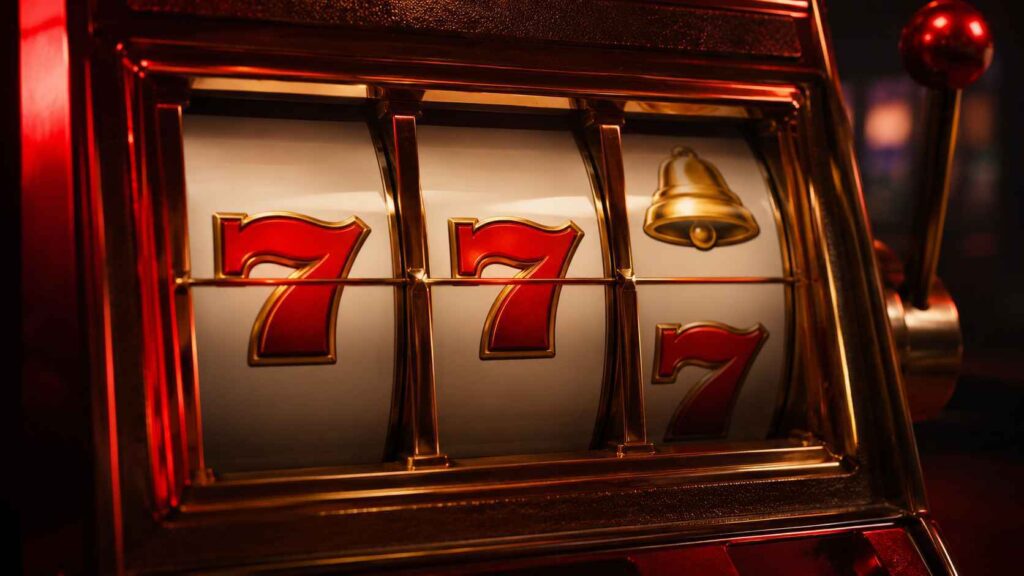
When a slot machine shows two jackpot symbols and then a third that stops one position away from completing the combination, the brain does not process that as a failure. It processes it as almost winning. The emotional response is closer to a win than to a neutral loss and the motivation to try again spikes accordingly.
This is not a bug in human psychology that casinos accidentally exploit. Near miss outcomes on slot machines are programmed deliberately. The frequency of near misses can be adjusted independently of actual payout rates. A machine can be set to produce near miss combinations far more often than random chance would generate them while still paying out at the mathematically determined rate. The near miss feels meaningful. Statistically it is identical to any other losing spin.
Research published in the journal Addiction found that near misses activate the same neural reward pathways as actual wins in problem gamblers. The brain responds to almost winning with a dopamine response that reinforces continued play. Players who experience more near misses report stronger urges to continue than those who experience straightforward losses.
Gaming uses the same principle with less financial consequence. The enemy that almost dropped the rare item. The ranked game lost by a single point. The chest that contained everything except the one piece you needed. These near miss structures maintain engagement in games for the same neurological reason they maintain engagement at slot machines. The difference is that in a game the cost of one more attempt is time. At a casino it is money.
Why This Is Harder to Resist Than It Sounds
Reading about variable ratio reinforcement and experiencing it are two entirely different things. Understanding the mechanism does not switch it off. That is not a personal failing. It is how the psychology works.
Skinner’s research showed that variable ratio schedules produce behaviour that is resistant to extinction even when the subject knows the reward structure has changed. The rat keeps pressing the lever after rewards stop because the variable schedule has conditioned it to interpret absence of reward as a reason to continue rather than a reason to stop. Human beings are not meaningfully different in this respect regardless of how much they understand about what is happening.
Gamers are particularly exposed to this for a specific reason. Years of engaging with variable reward systems inside games have not just exposed players to the mechanism. They have trained a response to it. The feeling of persistence in the face of an unrewarding run is familiar because it has been rewarded so many times before. In gaming that persistence eventually pays off because games are designed to be completable. The rare drop does eventually come. The ranked climb does eventually progress.
Casino systems are not designed that way. The variable ratio schedule runs indefinitely with no guaranteed resolution. There is no completion state, no point at which persistence is mathematically certain to pay off. The conditioning that served you well across thousands of hours of gaming is pointed at a system that does not reward it the same way.
Knowing this matters. Not because it makes resistance easy but because it reframes what is actually happening when the urge to continue feels rational. It is a conditioned response firing in an environment designed to produce exactly that response at exactly that moment.
Conclusion Know the Engine. Then Decide How You Drive.
Skinner’s rats kept pressing the lever because the system gave them no reason to stop. The variable ratio schedule is not beatable through willpower or intelligence. It operates below the level where those things intervene. What changes the outcome is structure applied before the session starts, not resolution applied during it.
Deposit limits, session timers, a clear decision about what you are there to do and when you are done. These are not admissions of weakness. They are the external structure that the variable ratio schedule is specifically designed to prevent you from building in the moment.
You now understand the engine better than most people who will ever sit down at a slot machine or open a loot box. That knowledge does not make you immune. It makes you the person in the room who knows what the room is actually doing.
For more on navigating casino platforms with your eyes open, Casivono covers it all in plain language.
FAQ
Q1: What is variable ratio reinforcement?
Variable ratio reinforcement is a reward schedule in which a reward is delivered after an unpredictable number of responses. Unlike fixed schedules where rewards arrive after a set number of actions or a set time period, the variable ratio schedule offers no pattern to predict. This unpredictability produces the highest and most persistent response rates of any reinforcement schedule, making it the most powerful tool for maintaining behaviour over time.
Q2: Why do slot machines use variable ratio reinforcement?
Because it produces behaviour that is extraordinarily resistant to stopping. A player on a slot machine cannot predict when the next payout will come, so each spin carries the possibility of being the winning one. The brain interprets this uncertainty as a reason to continue rather than a reason to stop. Slot machines are designed around this principle deliberately, not incidentally, because it maximises time spent playing and money spent per session.
Q3: Do video games use the same psychology as slot machines?
Yes, extensively. Loot drops, randomised reward chests, daily login bonuses and gacha mechanics all operate on variable ratio schedules. The reward varies, the timing is unpredictable and the player continues engaging because the next attempt might produce the desired outcome. Game developers adopted these mechanics because the engagement data showed they worked. The psychological mechanism is identical to what slot machines use. The financial stakes in most gaming contexts are lower but the conditioning effect on behaviour is the same.
Q4: What is a near miss in gambling psychology?
A near miss occurs when the outcome of a gamble comes close to a win without actually winning. On a slot machine this typically means two jackpot symbols landing with the third stopping one position short. Research has shown that near misses activate similar neural reward pathways to actual wins, producing an urge to continue playing that is stronger than a straightforward loss would generate. Near miss frequency on digital slot machines can be programmed independently of actual payout rates, making them a deliberate design tool rather than a random occurrence.
Q5: How can understanding variable ratio reinforcement help me gamble more safely?
It reframes what the urge to continue actually is. When you feel compelled to place one more bet after a losing run, that feeling is a conditioned response produced by the reward schedule, not a rational assessment that the next outcome will be different. Recognising the mechanism does not eliminate the urge but it creates distance between the feeling and the decision. Combined with practical tools set before the session, deposit limits, session timers, a clear exit point decided in advance, that understanding gives you a structural advantage the schedule cannot override in the moment.

Bryan Carter has been writing about online casinos and crypto gambling long enough to know that most of what gets published in this space is dressed up advertising. He started Casivono to fix that. The guides here cover how casino platforms actually work, what the regulation really says, and what players need to know before they put money anywhere. No rankings built around affiliate fees. No five star reviews for platforms that do not deserve them. Just straight information.